Project “Manpli”
, an initiative based in the
Chittagong Hill Tracts that empowers
Indigenous children to share their stories
through art, photography, and cultural
expression.
It is a photography camp project for the Khumi, Mro and Marma Indigenous children who are studying in Kinitheu Primary School in Naikhongchhari Upazila under Bandarban Hill District. The main objective of the project is to introduce Camera and Photography as an effective instrument to the Indigenous children to share their unsung stories especially about inequality, deforestation, water crisis and other complex factors leading their lives towards an uncertain future. The project also aims to counter “The idea of a photographic “gaze” that has been introduced since the colonial period.
“Mangpli” project focuses mainly on the lifestyle of the 35 Indigenous
children of Kinitheu Primary School who share a hostel near the school. The project tried to understand how they are painting their childhood including collecting water from the stream and tried to realize the impacts of the water crisis due to deforestation and climate change. The project also identified a good practice of the children that they initiated a small organic vegetable firm in there. There is still a huge bank of stories and a treasure of Indigenous knowledge to be discovered in there.
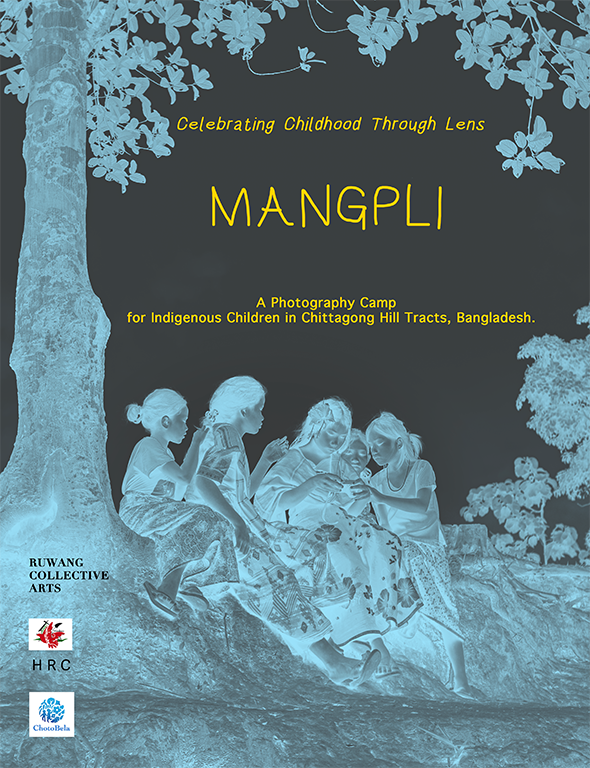
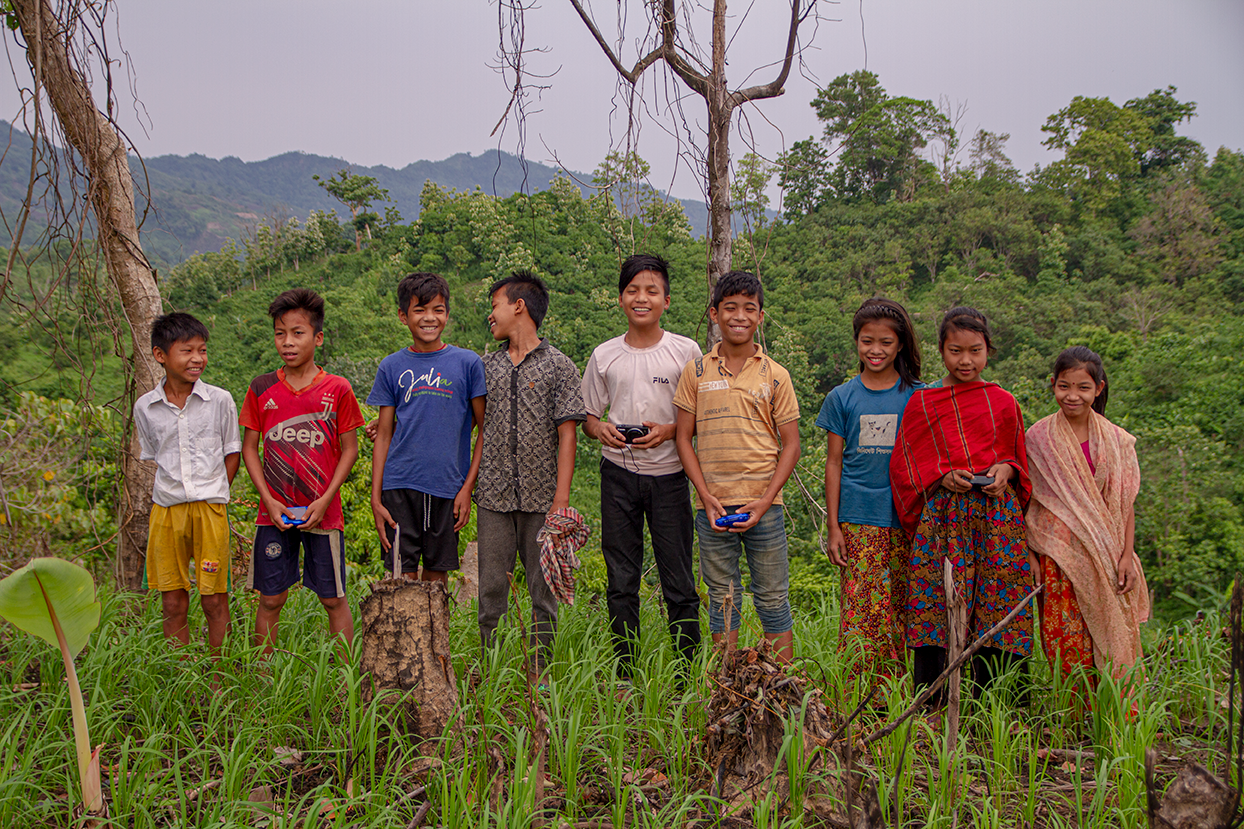
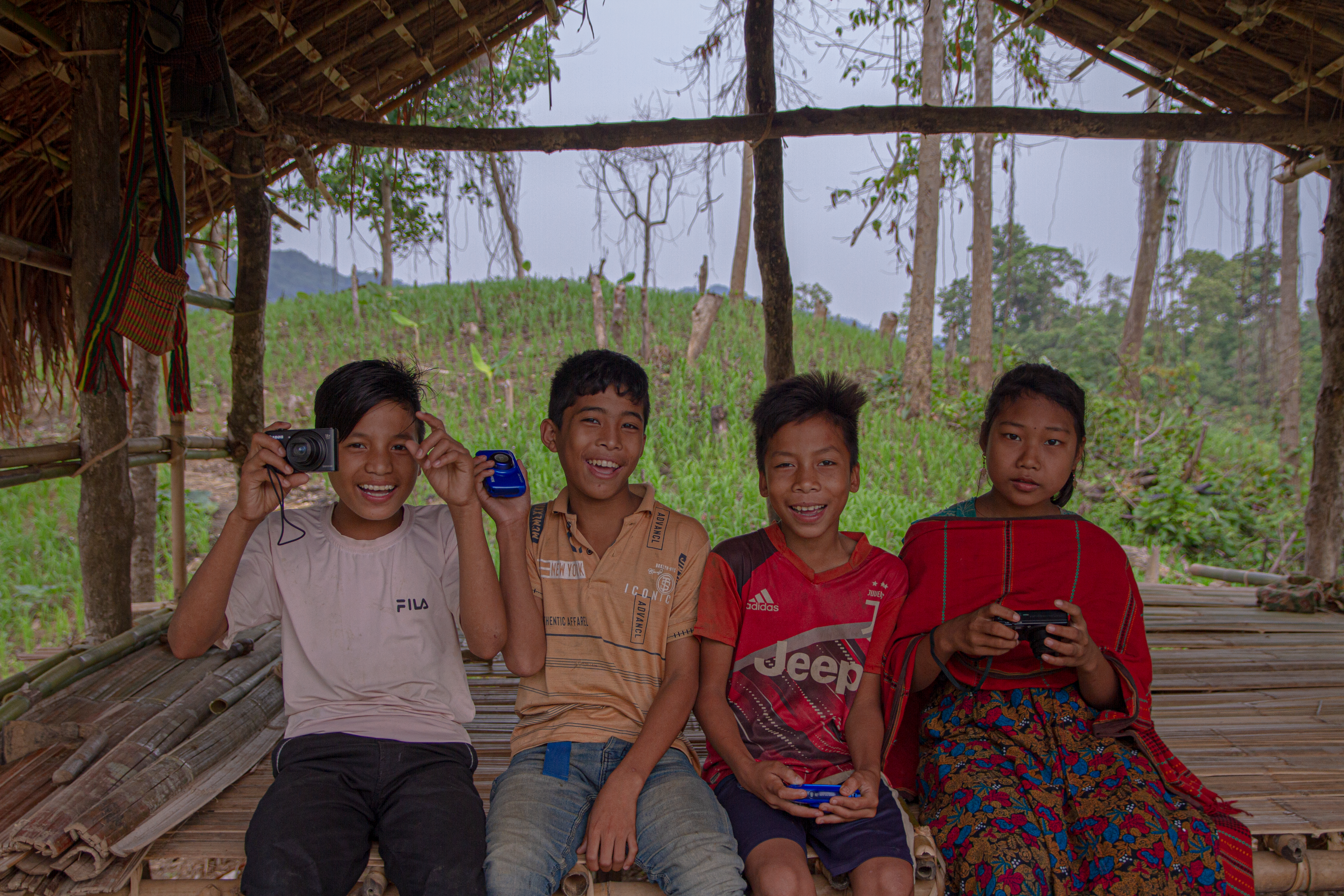

Mangpli, meaning “photograph” in the Kokborok Indigenous language, is an initiative based in the Chittagong Hill Tracts that empowers Indigenous children to share their stories through art, photography, and cultural expression. Designed as a photography and art camp, the project works with Khumi, Mro, and Marma Indigenous children studying at Kinitheu Primary School in Rowangchari Upazila, Bandarban Hill District, Bangladesh.
At its core, Mangpli introduces cameras and photography as powerful tools for self expression and storytelling. Through this medium, children are encouraged to document their lived realities and untold experiences. These stories are shaped by inequality, deforestation, climate change, water scarcity, and other complex challenges that increasingly define their futures. In doing so, the project also critically challenges the historical notion of the photographic “gaze,” rooted in colonial perspectives, by centering the children’s own voices and ways of seeing. The project focuses on the lives of Indigenous children who share a single room in a hostel near their school, reflecting a unique multicultural environment across different communities. Their collective life becomes a central narrative space where everyday experiences such as collecting water from nearby streams, adapting to environmental changes, and navigating limited resources are documented through their own lenses. These stories also reveal the impacts of deforestation, monoculture plantations, and climate change on their daily lives. An important dimension of Mangpli is highlighting the children’s own
initiatives and resilience, including their small organic vegetable garden, which reflects Indigenous knowledge and sustainable practices. As part of the program, selected participants are provided with digital compact cameras and camcorders and are guided in developing visual storytelling skills through
photography and film. Ultimately, Mangpli nurtures creativity, confidence, and critical awareness among Indigenous
children while uncovering a rich reservoir of untold stories and
cultural knowledge. It stands as both an artistic and socially engaged platform that amplifies underrepresented voices and
affirms the importance of seeing the world through Indigenous
perspectives.
 Ruwang Collective Arts